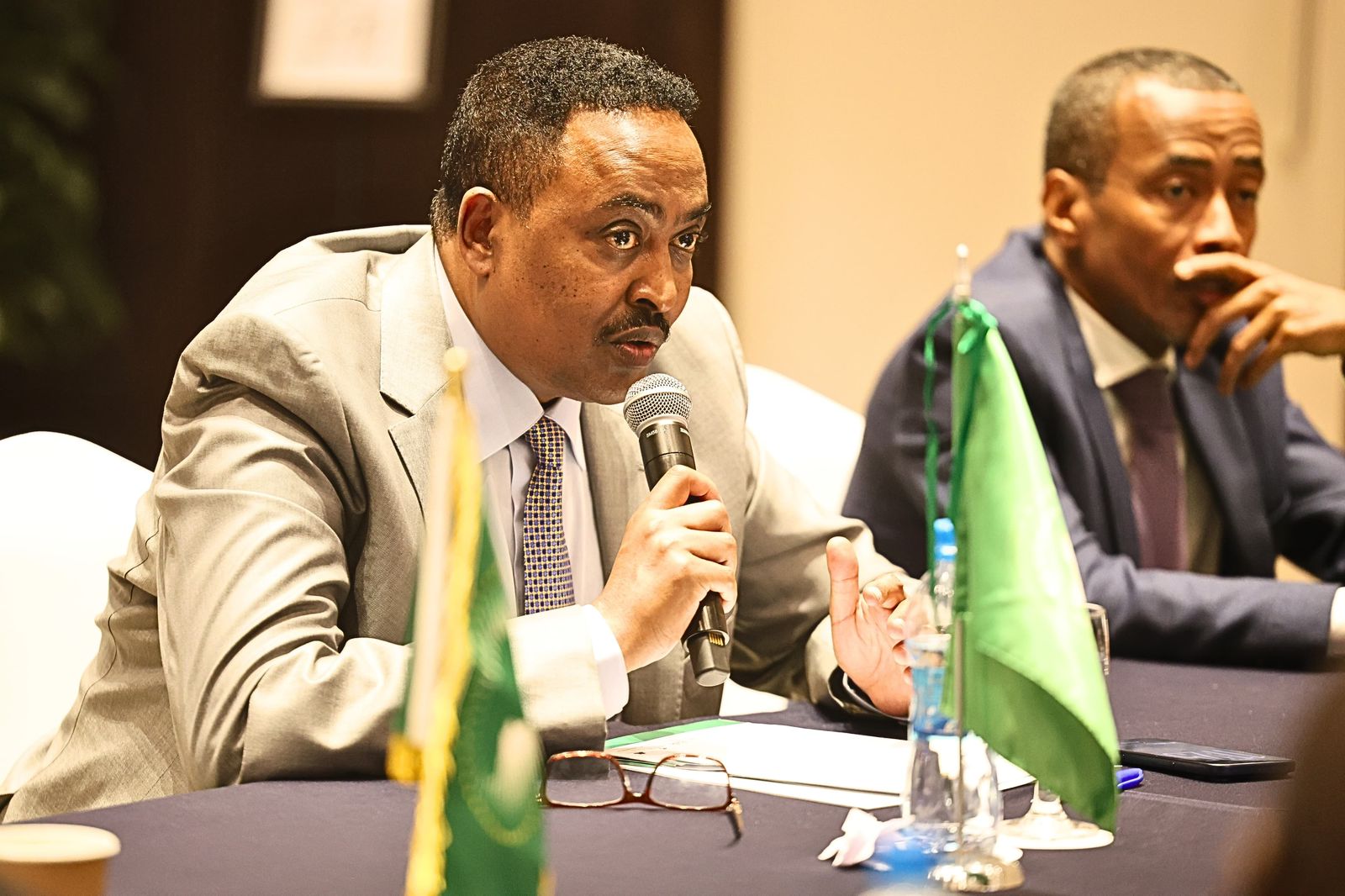
The Intergovernmental Authority on Development (IGAD)has welcomed Sudan’s decision to resume full participation in the regional bloc.
IGAD officials say Sudan’s return strengthens regional unity and reinforces collective efforts toward peace, stability, and cooperation, as the organisation signals readiness to support Sudan through ongoing challenges.
In a statement issued on February 9, 2026, from Djibouti, the IGAD Secretariat said it “welcomes the decision of the Republic of the Sudan to resume its full participation in the Organisation,” marking the end of a period in which Sudan’s engagement with the body had been limited.
The decision has been described by IGAD’s leadership as an important moment for the regional organisation, which brings together countries in the Horn of Africa and neighbouring regions to coordinate on peace, security, and development.
The IGAD Executive Secretary, Workneh Gebeyehu, characterised Sudan’s return as a reaffirmation of shared regional values.
He said the move represented a reaffirmation of regional solidarity and collective commitment to peace, stability, and cooperation across the region.
Sudan is one of IGAD’s founding Member States, and Workneh said its renewed engagement would have practical and symbolic importance for the bloc.
According to the statement, he noted that Sudan’s return strengthens IGAD’s unity and enhances its capacity to address shared regional priorities.
IGAD has historically played a central role in mediating conflicts and promoting dialogue in the Horn of Africa, including efforts related to Sudan’s political transitions and internal conflicts.
The Secretariat indicated that Sudan’s return would bolster the organisation’s ability to respond collectively to complex regional challenges.
The statement also highlighted the role played by the current Chairperson of IGAD, H.E. Ismail Omar Guelleh, President of the Republic of Djibouti, in facilitating Sudan’s return.
Workneh expressed deep appreciation to President Guelleh for his leadership and constructive engagement throughout the process.
According to the Secretariat, the IGAD Chairperson was commended for his steadfast commitment to dialogue and consensus building in advancing regional cohesion, underlining the emphasis placed on diplomatic engagement rather than confrontation within the organisation.
Sudan’s renewed participation comes at a time when the country continues to face significant political and security challenges, with regional and international actors seeking ways to support a peaceful resolution.
IGAD has been one of the platforms through which neighbouring states have sought to engage Sudan on these issues.
In its statement, the IGAD Secretariat signalled its intention to remain actively involved. It said it “reaffirmed its readiness to work closely with the Republic of the Sudan in advancing a peaceful resolution of the current challenges.”
The Secretariat also emphasised a broader vision beyond immediate conflict management, expressing its commitment to supporting a secure and prosperous future for the Sudanese people and the wider region.
For IGAD, Sudan’s return is being framed not only as a diplomatic development but also as a practical step toward reinforcing collective regional mechanisms.
As a founding member, Sudan’s participation is seen as integral to the organisation’s identity and effectiveness.
While the statement did not detail the reasons behind Sudan’s earlier disengagement or the specific terms of its return, the tone of the announcement stressed unity, cooperation, and forward-looking engagement.
IGAD’s message reflects a wider regional concern that instability in one member state can have ripple effects across borders, affecting trade, security, and humanitarian conditions.
By welcoming Sudan back, the organisation appears keen to underline the importance of inclusive regional frameworks in addressing such challenges.
As Sudan resumes its seat within IGAD, attention is likely to focus on how this renewed engagement translates into concrete cooperation, particularly in efforts aimed at peace, stability, and long-term development within Sudan and across the Horn of Africa.































Comments
Sign in with Google to comment, reply, and like comments.
Continue with Google